
Retiring in the Philippines: A Foreigner's Guide - Copy
Philippines Real Estate, Retirement, Investment Property
Retiring in the Philippines: A Foreigner's Guide
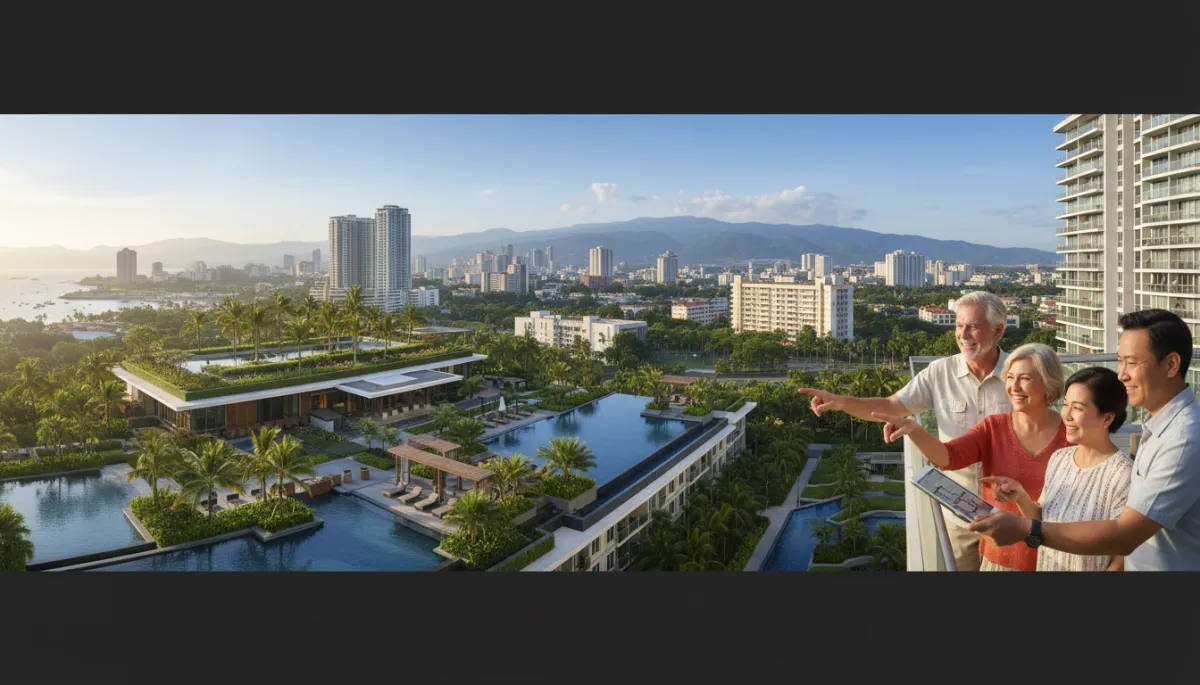
Retiring in the Philippines is attractive for foreigners, OFWs, and high-earning professionals because it combines relatively affordable property prices, strong lifestyle value, and solid long-term appreciation potential compared with many mature markets.
1. Why Retire in the Philippines in 2026? (Costs, Lifestyle, Healthcare)
Retiring in the Philippines in 2026 makes sense for many foreigners and OFWs because living costs, property prices, and healthcare access remain competitive while the residential market is recovering from recent slowdowns. The Bangko Sentral ng Pilipinas reports that the Residential Property Price Index rose about 5.6% quarter-on-quarter and 4.5% year-on-year in Q1 2026, indicating a market that is growing again but still priced below previous peaks in real (inflation-adjusted) terms. Real values remain roughly 37% below pre–Asian Financial Crisis levels, giving long-term buyers room for property appreciation over the next decade.
For retirees used to prices in North America, Europe, the Middle East, or East Asia, the numbers are compelling. Median condominium prices nationwide are around ₱4.72 million (approx. $84,286 USD), with the median for all housing types at ₱3.9 million (approx. $69,643 USD). Even in the National Capital Region (NCR), median house prices average about ₱8.36 million (approx. $149,286 USD), often significantly lower than comparable urban homes in London, Dubai, Singapore, or major U.S. cities, while still offering access to international schools, private hospitals, and business districts like Makati and Bonifacio Global City (BGC).
For upper-income professionals—company owners, C‑suite executives, politicians, doctors, and lawyers—the Philippines offers a lifestyle mix that is difficult to replicate: staffed homes with drivers and household help, golf and country clubs, and access to both urban amenities and weekend beach or mountain escapes within a few hours’ drive or a short flight. For many OFWs, securing an OFW property back home is also an emotional milestone, turning years of overseas work into a tangible, income-generating asset for retirement and family succession planning.
2. Can Foreigners and OFWs Own Property in the Philippines?
Foreigners and OFWs can own property in the Philippines, but the rules differ for land, condos, and corporate ownership structures. Foreign citizens may legally own condominium units as long as foreign ownership in the building does not exceed 40% of total sellable area. This is why many foreigners focus on condo projects in Makati, BGC, Ortigas, Cebu Business Park, and emerging estates like Arca South and Parklinks when planning retirement or investment property Philippines strategies.
Direct land ownership is generally restricted to Filipino citizens or corporations that are at least 60% Filipino-owned. High-net-worth foreigners who wish to control land typically explore structures such as:
- Buying in the name of a Filipino spouse (with proper legal and estate planning advice)
- Investing through a Philippine corporation that complies with ownership caps
- Leasing land long-term (up to 50 years, renewable) for personal use or development
Overseas Filipino Workers, meanwhile, enjoy the full rights of Filipino citizens to own both land and condos, whether they reside in the Philippines or abroad. For OFWs who want to buy property from abroad, reputable developers like Ayala Land and Alveo Land have dedicated international sales teams, online reservation systems, and even Zoom site visit options so you can review model units, views, and estate plans from your current country of residence before committing.
3. How Much Do Condos and Houses Cost in 2026? (Price Ranges & Sqm)
Condos and houses in the Philippines in 2026 range from below ₱4 million (approx. $71,429 USD) in secondary cities to ₱80 million (approx. $1,428,571 USD) and above in prime Metro Manila estates, giving retirees and investors flexibility across budgets and risk profiles. Nationwide, the median condo price is around ₱4.72 million (approx. $84,286 USD), but in key estates of Ayala Land and Alveo Land, you'll typically see higher entry points reflecting superior locations, master-planned communities, and stronger rental demand.
| Area / Estate | Typical Unit | Approx. Price Range (₱) | Est. Price / sqm |
|---|---|---|---|
| BGC – Park East Place (Alveo Land) | 1–3 BR condo | 26.3M – 65.7M (approx. $469,643–$1,173,214 USD) | ~₱420k–₱520k/sqm (approx. $7,500–$9,286 USD/sqm) |
| Circuit Makati – Astela / Callisto | Studio–3 BR condo | 11M – 48.5M (approx. $196,429–$866,071 USD) | ~₱280k–₱380k/sqm (approx. $5,000–$6,786 USD/sqm) |
| Cebu Business Park – Solinea / Cerule | Studio–2 BR condo | 6.4M – 28.7M (approx. $114,286–$512,500 USD) | ~₱210k–₱300k/sqm (approx. $3,750–$5,357 USD/sqm) |
These figures illustrate how a pre-selling condo Philippines purchase in a strong Ayala Land estate can start in the mid‑single digit millions for compact units, while signature high-floor suites command significantly higher prices. For upper-class buyers used to major global cities, a ₱45–₱80 million (approx. $803,571–$1,428,571 USD), 150–200 sqm (1,615–2,153 sqft) three-bedroom in Makati or BGC can feel relatively "good value" compared with central Hong Kong, Tokyo, or London, while still delivering a comfortable retirement base or corporate housing asset for your portfolio.
4. Is a Pre-Selling Condo in the Philippines a Good Investment for Retirement?
A pre-selling condo in the Philippines can be a strong retirement and investment strategy if you choose established developers, proven estates, and realistic timelines for turnover and rental demand. In 2026, Ayala Land and Alveo Land continue to focus on fewer, higher-impact launches, with about 33 of 47 active Alveo projects in preselling phase. This disciplined approach aims to support long-term property appreciation by avoiding oversupply in their key estates and maintaining construction quality and estate management standards that tenants and buyers trust.
For foreigners and OFWs, pre-selling offers three main advantages:
- Staggered payments: You usually pay 20–30% spread over several years, matching your remaining working years abroad, with the balance due upon turnover or via bank financing.
- Potential price upside: Buying early in projects like Park East Place (BGC), Astela (Circuit Makati), or Cerule at Solinea (Cebu) can capture capital gains as the estate matures and infrastructure around it improves.
- Customization and choice: Earlier buyers have better chances of securing preferred views, unit layouts, and parking slots that later drive resale and rental premiums.
When evaluating any pre-selling condo Philippines option, especially in Makati, BGC, Ortigas, Cebu, or Davao, it is essential to examine developer track record, estate masterplan, and realistic handover dates. Alveo Land's portfolio—such as Park Cascades in Arca South, The Lattice at Parklinks in Pasig, and Patio Suites in Davao—illustrates how integrated estates can support both end-user retirees and investors seeking stable rental demand from corporate tenants, BPO professionals, and expatriates.
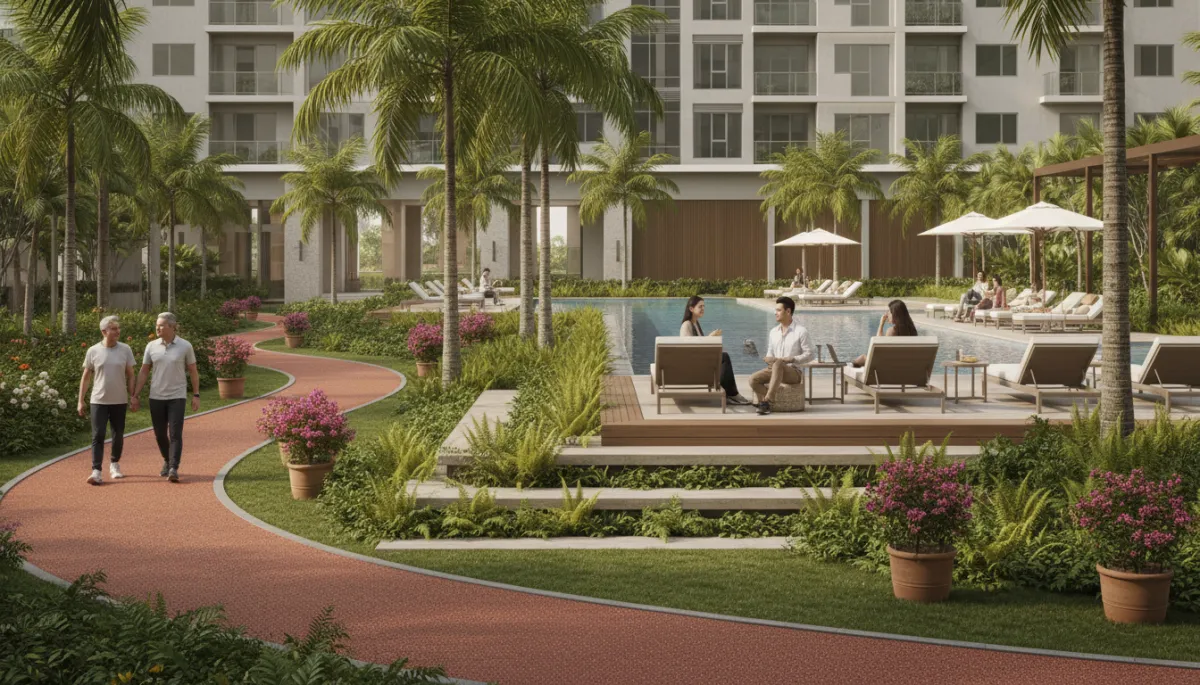
Integrated condo estates combine retirement comfort with strong tenant demand for investors.
5. What Rental Yields Can You Expect from Investment Property in the Philippines?
Investment property in the Philippines currently offers gross rental yields of roughly 5–6% nationally, with best-case scenarios reaching 7–9% in select Metro Manila and Cebu submarkets, but net yields typically compress to 3–5% after costs. Data from Global Property Guide and other 2026 sources indicate that Metro Manila's average gross yield sits around 5.8%, while specific areas like BGC, Makati CBD, and Ortigas can deliver higher returns, especially for smaller studio and one-bedroom units in professionally managed buildings.
For example, recent benchmarks suggest:
- BGC: studios and 1‑BR units can achieve 7–9% gross rental yield, translating to roughly 5.5–7.5% net in optimized setups.
- Makati CBD: gross yields around 6–8%, with net returns at 4.5–6.5% after association dues, property tax, and vacancy.
- Cebu IT Park / Lahug: about 7.2% gross and 5.3% net for well-located two-bedroom units.
Investors should distinguish between gross rental yield and net yield. Net yields in many Metro Manila condos fall to 2–4% once you factor in association dues, repairs, management, and vacancy risk. This is why location, tenant profile, and building quality are crucial. Estates developed by Ayala Land and Alveo Land generally command higher rents and lower vacancy, supporting better long-term net returns and more resilient property appreciation, especially for high-earning investors who prioritize capital preservation, estate quality, and ease of management over chasing the absolute highest percentage yield.
6. Where Should Foreigners, OFWs, and Executives Buy for Retirement?
The best locations for foreigners, OFWs, and high-income professionals to buy retirement and investment property in the Philippines are master-planned estates with strong connectivity, reputable schools and hospitals, and a deep rental market. For many, this points to Ayala Land and Alveo Land communities in Makati, BGC, Ortigas, Quezon City, Arca South, Cebu Business Park, and select provincial growth hubs like Lipa, Silang, Cagayan de Oro, and Davao City.
- Makati & BGC (Park East Place, Parkford Suites, Mergent Residences): Ideal for executives, professionals, and foreign retirees who want to stay near embassies, top hospitals, and corporate headquarters, with 35–80 sqm (377–861 sqft) units for singles and couples and 100–200 sqm (1,076–2,153 sqft) units for families or corporate leases.
- Circuit Makati (Astela, Callisto): Suitable for OFWs and investors seeking slightly lower entry prices than Makati CBD but with strong appreciation potential as the entertainment and arts district matures.
- Cebu Business Park (Solinea, Cerule): Attractive for Visayas-based retirees and investors, with a balanced mix of end-user demand and BPO tenants, plus easier access to beaches and resorts.
- NUVALI, Silang, Lipa, Cagayan de Oro, Davao (South Palmgrove, Verdea, Hillside Ridge, Bayview Heights, Patio Suites): Appealing for those who prefer cooler climates, larger lot sizes, or quieter city environments, while still benefiting from Ayala Land estate planning and Alveo Land's mid- to high-end positioning.
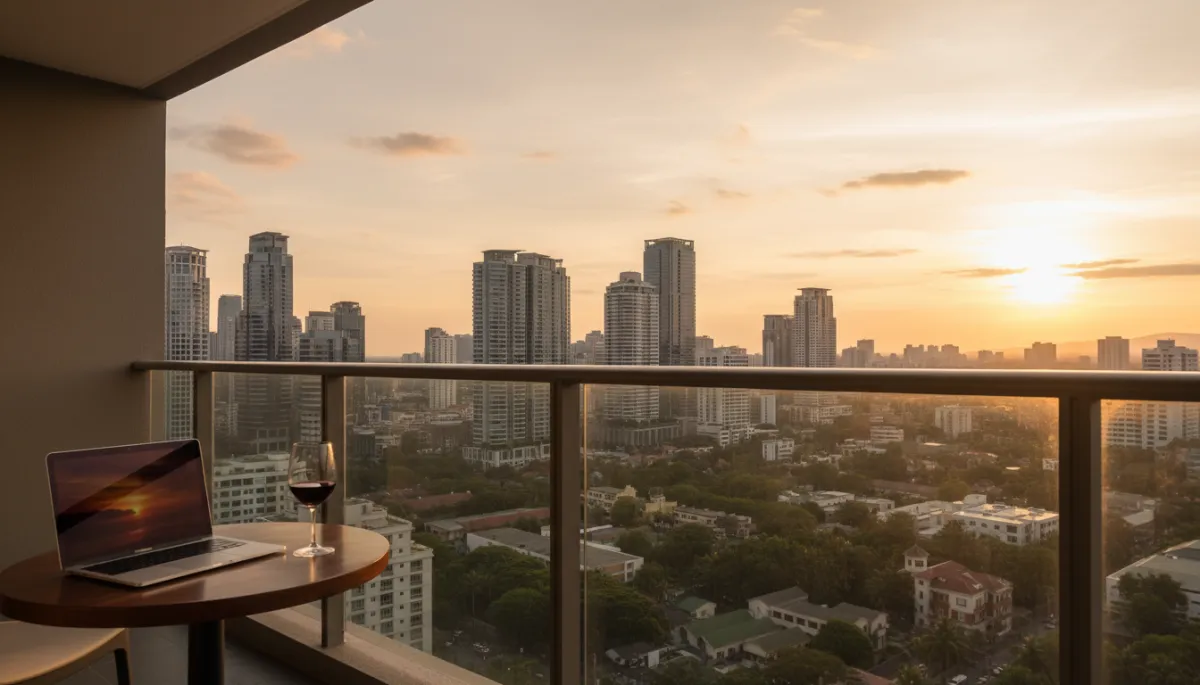
Prime business districts offer both lifestyle convenience and resilient rental demand.
7. How Can OFWs and Foreigners Buy Property from Abroad Safely?
OFWs and foreigners can safely buy property from abroad by working only with licensed professionals, using secure digital processes, and insisting on clear documentation and virtual tours before sending funds. Developers like Ayala Land and Alveo Land have streamlined this experience through online booking systems and Zoom site visit options, allowing you to inspect show units, view corridors and amenities, and study estate plans in real time from your home in Dubai, Singapore, London, or New York.
- Verify PRC and DHSUD credentials: Always confirm that your real estate broker or salesperson holds a valid Professional Regulation Commission (PRC) license and that the project is registered with the Department of Human Settlements and Urban Development (DHSUD). This is your baseline protection against scams and unlicensed operators.
- Request a structured digital presentation: Ask for a full project briefing, copies of the project permit, sample computation, and draft contract to sell. A reputable team will gladly walk you through these documents during a Zoom call and send soft copies for your lawyer or accountant to review.
- Use secure payment channels: Pay reservation and down payments only through official developer bank accounts or accredited payment gateways, never to a personal account. Keep digital copies of all receipts and official acknowledgments.
8. Building a Retirement Portfolio: One Home, One Investment, One Legacy
The most effective retirement strategy for many foreigners, OFWs, and high-net-worth Filipinos is to combine a personal residence with at least one income-generating investment property in the Philippines. For example, a doctor or lawyer in Manila might secure a 120 sqm (1,292 sqft) three-bedroom unit in Makati for personal use while holding a 35–45 sqm (377–484 sqft) studio in BGC as a rental unit. An OFW couple in the Middle East might buy a 70 sqm (753 sqft) two-bedroom in Cebu Business Park as their future home plus a smaller pre-selling condo in Davao or Cagayan de Oro for yield and diversification.
Over a 10–15 year horizon, this approach can deliver three layers of benefit:
- Property appreciation: With the national Residential Property Price Index already rebounding and still below historical real-value peaks, well-chosen units in Ayala Land and Alveo Land estates have room to appreciate as infrastructure, office demand, and tourism recover further.
- Rental income: Net rental yields of 3–5% in strong submarkets can supplement pensions, professional income, or business dividends, especially when managed by professional leasing teams.
- Legacy and succession: Real estate in established estates is easier to pass on to heirs, mortgage, or refinance, giving your children or grandchildren a tangible foothold in the Philippine economy.
9. Next Steps: Talk to a Licensed Specialist Before You Reserve
The safest next step for foreigners, OFWs, and high-income investors considering retirement in the Philippines is to consult a licensed real estate professional who understands both your lifestyle goals and your investment requirements. Before you reserve any pre-selling condo Philippines project, ask for a customized comparison of units across Ayala Land and Alveo Land estates, including projected rental yield, historical property appreciation, and exit strategies based on your time horizon and risk appetite.
Whether you are a CEO planning an executive pied-à-terre in BGC, a surgeon returning from the U.S. to semi-retire in Cebu, or an OFW couple in the Middle East building an OFW property portfolio from abroad, a structured consultation can clarify which combination of unit sizes, locations, and payment schemes will best support your retirement and wealth-transfer plans. Always ensure that the person advising you holds a valid PRC Real Estate Broker license and that all projects you consider are properly registered with DHSUD before you sign or send funds.
With the right guidance, a carefully chosen condo or house-and-lot in a well-planned Philippine estate can serve as your retirement home, your investment property Philippines anchor, and a lasting gift to the next generation—all while letting you enjoy warm weather, familiar culture, and the comfort of living close to family and key business centers.
